

What is corten steel?
Weathering steel with a rust layer that protects the steel itself.
Corten steel: steel that protects itself
Corten steel is weathering steel with small additions of copper, chromium, nickel and phosphorus. Outdoors, a dense layer of rust forms on the surface: the patina. This layer adheres well to the steel and strongly slows down further corrosion. As a result, corten steel does not need to be painted or treated.
The name comes from the original brand COR-TEN: COR stands for corrosion resistance, TEN for tensile strength. It is also known as weathering steel, Corten and Cor-Ten.
At a glance
- On delivery: grey steel, not yet rusted.
- First rust: after 2 to 3 weeks outdoors.
- Stable patina: after about 12 to 18 months, depending on weather and location.
- Maintenance: no paint, oil or coating needed.
- Note: in the early stage, rust can stain light-coloured surfaces.

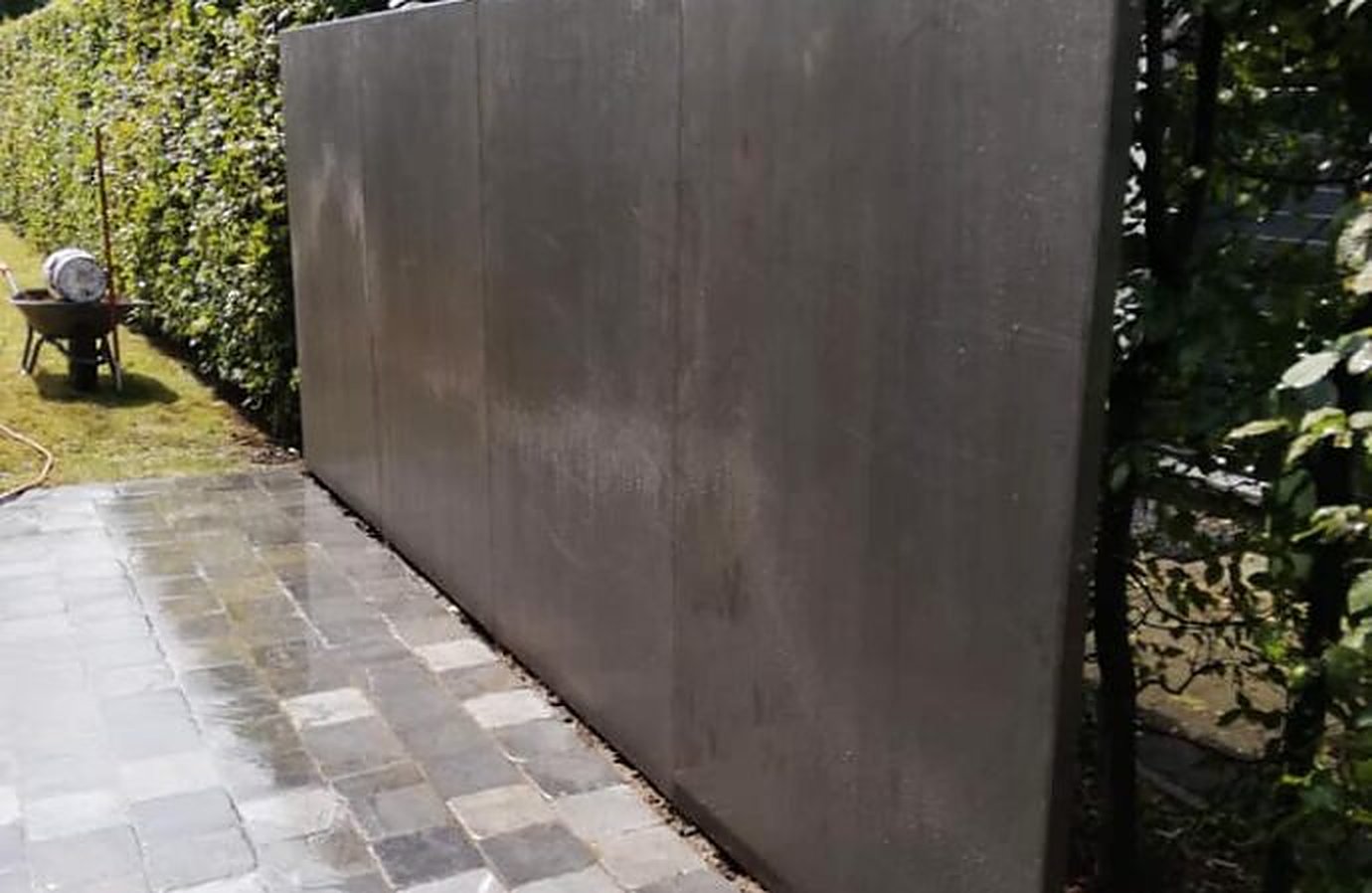 Just installedA few months later
Before and after
How corten steel gets its rust colour
The same corten steel fence: on the left just after installation, on the right a few months later. Our corten steel products are delivered unrusted. Rain, sun and wind do the rest. Slide across the photo to see the difference.
- On delivery: grey steel, no rust yet.
- After 2 to 3 weeks: the first orange rust appears, still uneven.
- After 12 to 18 months: a stable, warm brown patina.
How fast this happens depends on the weather and location. Want the rust colour straight away? Use our rust accelerator.
Benefits and points of attention
Corten steel is a strong, maintenance-free material, but it does call for careful placement. This way you know in advance what to expect.
Benefits of corten steel
- No paint or treatment needed: the patina protects the steel
- Long service life, much longer than untreated steel
- Strong: even thinner plates stay rigid and straight
- Warm, natural colour that suits modern and rural gardens
- Fully recyclable
- Suitable for gardens, public spaces and interiors
Points of attention
- In the early stage, rust can stain patios, façades or light tiles
- The steel must not stay wet all the time: provide drainage and do not use clay pebbles
- Less suitable within about 1.5 km of the coast because of salt in the air
- No chlorine or road salt in contact with the steel
- The colour is never completely even and changes over time
Geroba works with quality class A corten steel.
Corten steel at Geroba
At Geroba you will find standard products and custom work in corten steel, for gardens and public spaces. For standard products we usually use plates of 2 or 3 mm thick; other thicknesses are possible for custom work. You can collect your order at our warehouse in Lier or have it delivered.
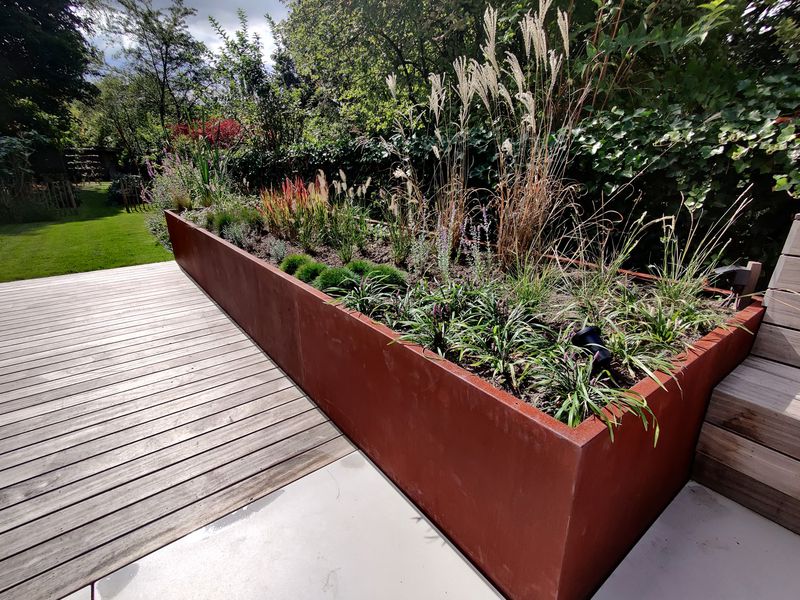 PlantersView ›
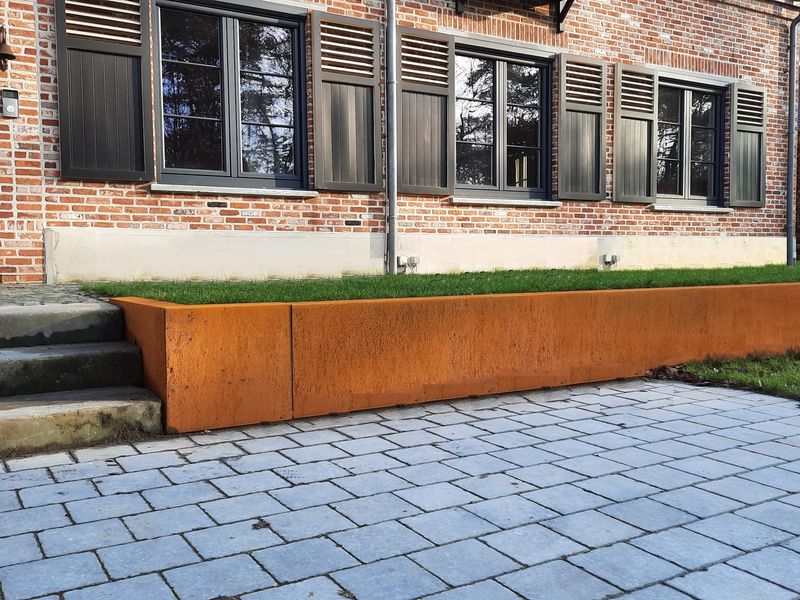 Retaining wallsView ›
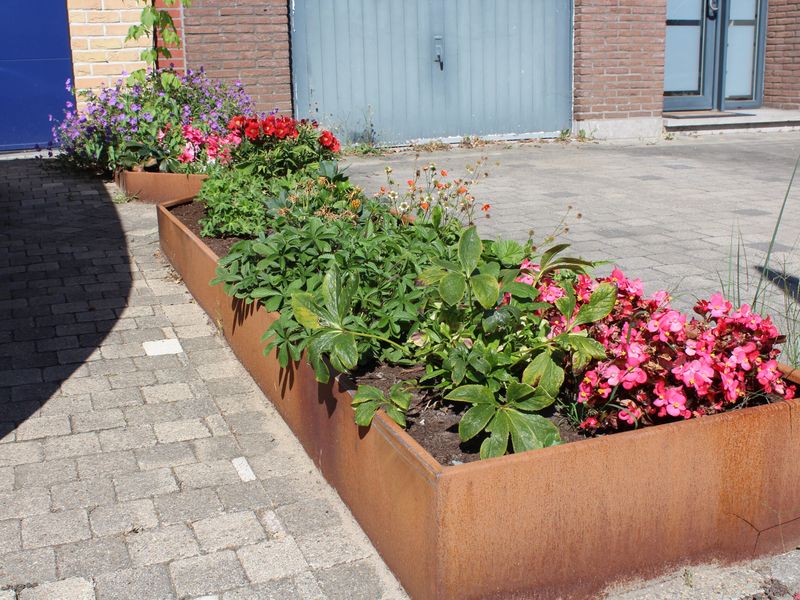 EdgingView ›
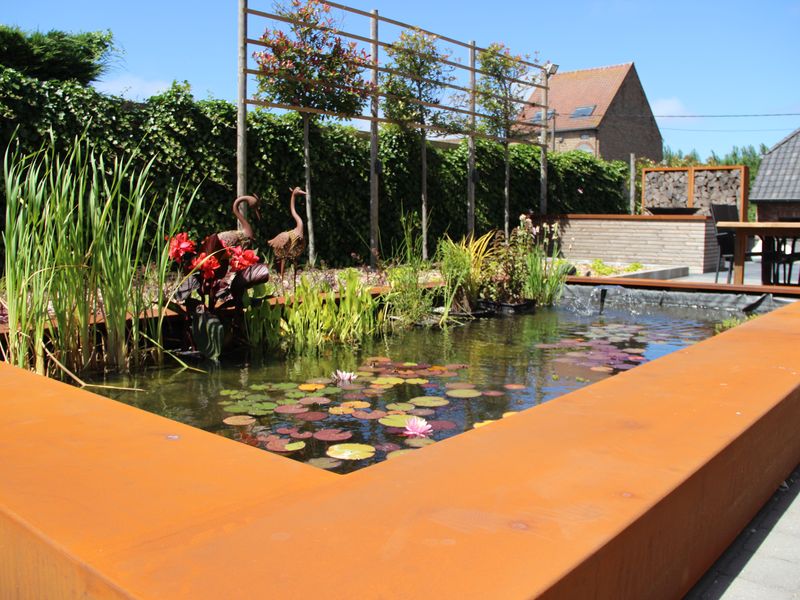 PondsView ›
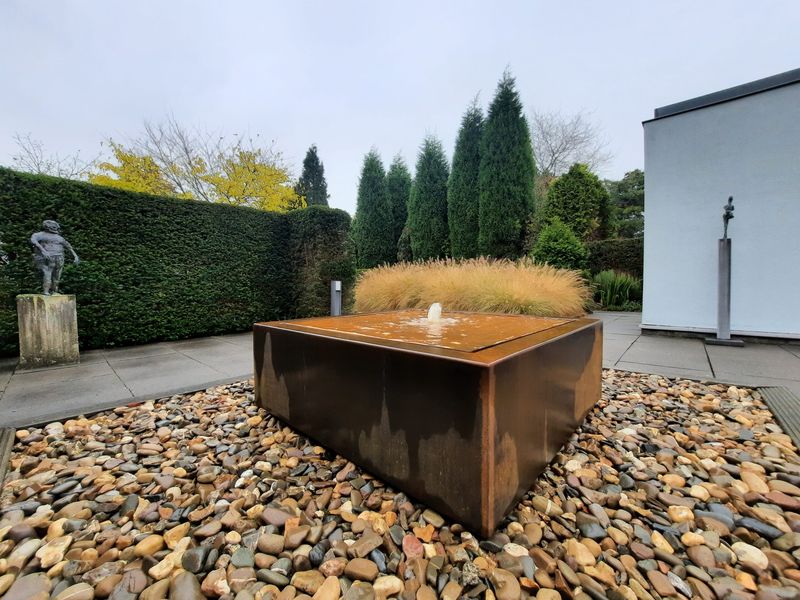 Water tablesView ›
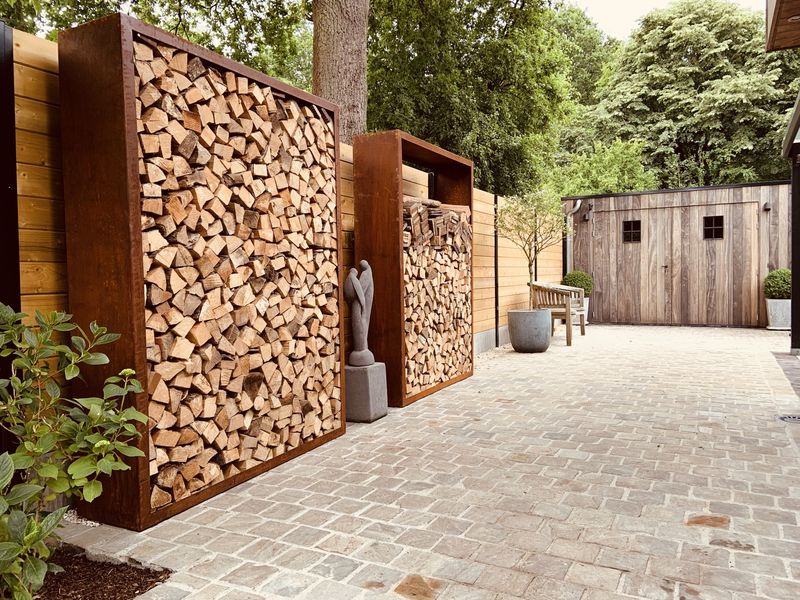 Firewood storageView ›
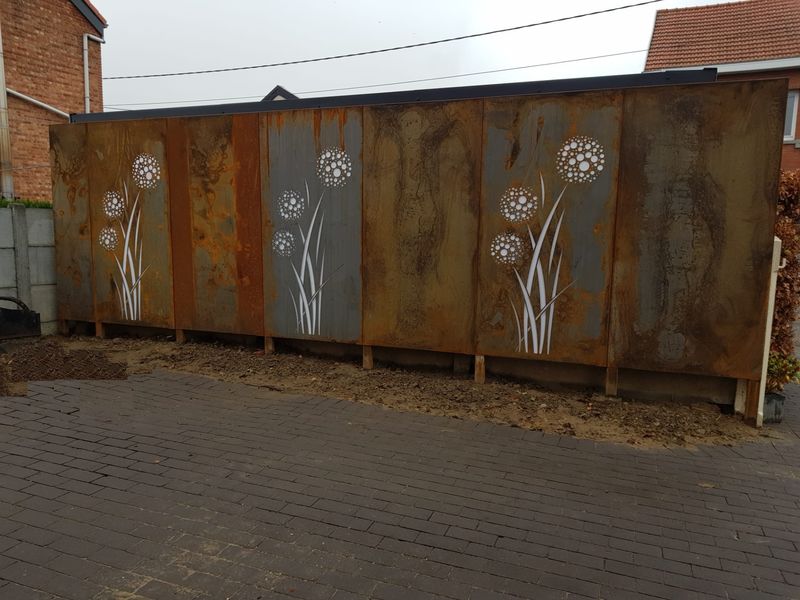 FencingView ›
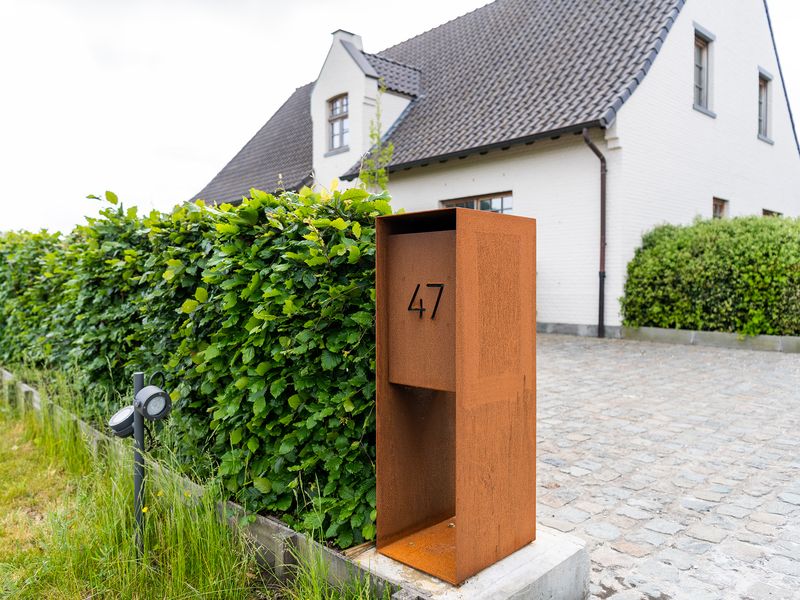 MailboxesView ›
Also in corten steel: garden stairs, tree rings and capping profiles. Something specific in mind? Discover the options for custom work or get inspired by our projects.
Composition of corten steel
Corten steel is a low-alloy steel. Besides iron and carbon, it contains small amounts of:
- Copper (Cu): creates a dense, well-adhering rust layer.
- Chromium (Cr) and nickel (Ni): increase corrosion resistance.
- Phosphorus (P): reinforces the effect of copper and helps the patina recover after scratches.
Together they form the patina: a rust layer that, unlike on ordinary steel, does not keep flaking off but seals the steel. How quickly this layer forms depends on alternating wet and dry weather. If the steel stays damp all the time, or stands in a salty environment such as the coast, the protective layer cannot form properly.
The colour is usually orange to dark brown and never completely even. Climate, location and the position of the product (vertical or horizontal) determine the final shade.
Corten steel and the environment
Corten steel is not painted, coated or galvanised. So no paint residues or zinc compounds are released during use, and no coating needs to be removed when it is recycled. The alloying elements make up only a small part of the steel and are bound in its structure.
Because the patina protects the steel, a corten steel product lasts a long time without maintenance. At the end of its life it is fully recyclable into new steel.
In the early stage, some rust washes off with rainwater. This is iron oxide and not a toxic substance, but it can stain light paving.
Frequently asked questions about corten steel
Yes. Corten steel and weathering steel are synonyms. The material was developed in the United States in the 1930s under the brand name COR-TEN and has been used in Europe since the 1960s. Today it is available under various names. COR stands for corrosion resistance, TEN for tensile strength. In short: a strong steel with good resistance to atmospheric corrosion.
A corten steel planter must not stay wet all the time, as the rust layer can then start to flake. So do not use substrates that retain water, such as clay pebbles or hydro granules. Corten steel gets its protective patina precisely from alternating wet and dry conditions. If the planter stays damp continuously, the rusting process does not stop.
At the start of the rusting process, corten steel can stain your patio. We therefore recommend not placing the products on a light-coloured patio in the early stage. Once the patina is stable, after about 12 to 18 months, you can place the product anywhere. If you do get rust stains, you can usually remove most of them with a suitable rust stain remover. The result depends on the product and on how quickly and thoroughly you clean.
On delivery, corten steel does not yet have its typical orange-brown colour. The first rust appears after 2 to 3 weeks outdoors. After about 12 to 18 months the patina is stable. Alternating wet and dry weather is important for the protective layer to form. The exact duration depends strongly on the weather and on where the product is placed.
No. The rust layer protects the steel, so oiling or painting is not necessary. After a scratch, the patina restores itself over time. Keep in mind that corten steel can release iron oxide in the early stage. So do not place it on a light or porous surface until the patina is stable.
Yes. Don't want to wait until the product has its rust colour? With our Geroba rust accelerator, corten steel gets its rust colour faster and in a controlled way.
Yes. The colour of corten steel changes during the rusting process: lighter orange at first, darker brown later. If you want to keep a certain colour or avoid rust run-off, the steel can be finished with a transparent coating. A coating does require maintenance over time. Feel free to contact us for advice.
No. Corten steel does not tolerate long-term exposure to salt well. We therefore advise against using it within about 1.5 km of the coast. Do not use table salt to speed up the rusting process either; choose our rust accelerator instead. Also be careful with products that contain a lot of chloride: do not add chlorine to a corten steel water feature, as it can damage the patina and cause it to flake.
Yes. Corten steel is also used for bridges and façades and has a very long service life. Because it has no paint or other protective layer, it is also easy to recycle.
Yes, if the corten steel stays wet all the time. That is why we coat the inside of our ponds, water tables and other water features. It is also important that no water remains in planters; that is why our planters have drainage holes as standard. Do not use clay pebbles, as they keep the planter damp.
No. Corten steel is not painted or post-treated, so no paint residues or other harmful substances are released. The rust that washes off at first is iron oxide.
Yes. Corten steel is made to stand outdoors and withstands rain, snow, wind and sun without losing strength. It is also resistant to large temperature differences.
Yes. Corten steel is fully recyclable and retains its properties when reused. That makes it a good choice for projects where sustainability matters.